

Triggering subjects
Probably not the type of "triggering" you're thinking, though

There’s a scene in this season’s most hate-it-or-love-it Oscars movie, Marty Supreme, that has stuck with me in the months since I first saw the movie. And it’s not even one that centers Marty, which most of the memorable scenes do. I won’t spoil it except to say that it’s one moment in the movie that really surprised me (if you’ve seen the movie, I’ll just say that it involves a black eye… IYKYK).
It stuck with me because it revealed the lengths another character was willing to go to escape her circumstances — even if it meant betraying everyone around her. In this one twist of a little scene, she shows how she’ll tether herself to pretty much anything or anyone to get escape velocity from the life she’s found herself stuck in.
Maggie Shipstead’s incredible, epic historical novel Great Circle has a protagonist with similar, if much more existential, aims than Marty Supreme himself. Marian Graves wants to be a pilot, but more than that — she wants to fly, to have the ability to be up and away from her circumstances at any moment, with nothing holding her back.
In pursuit of that aim, she irrevocably harms the three relationships in her life that mean most to her: those with her twin brother Jamie, her adoptive uncle, and her oldest friend.
Later, given an opportunity to reminisce about the complications of his sister with a woman who briefly knew her, Jamie says,
“She only wants to fly airplanes. She doesn’t like being bound to people.”
The woman’s forehead “creases with consternation”, and she replies:
“Being bound to people is the heart of life. My children have lit me up, lit up the whole world. It’s love like you can’t imagine.”
If you’ve seen Marty Supreme, you’ll understand why this last passage in particular highlights the resonance between these two stories about complicated people with big ambitions — obsessions, one might say.
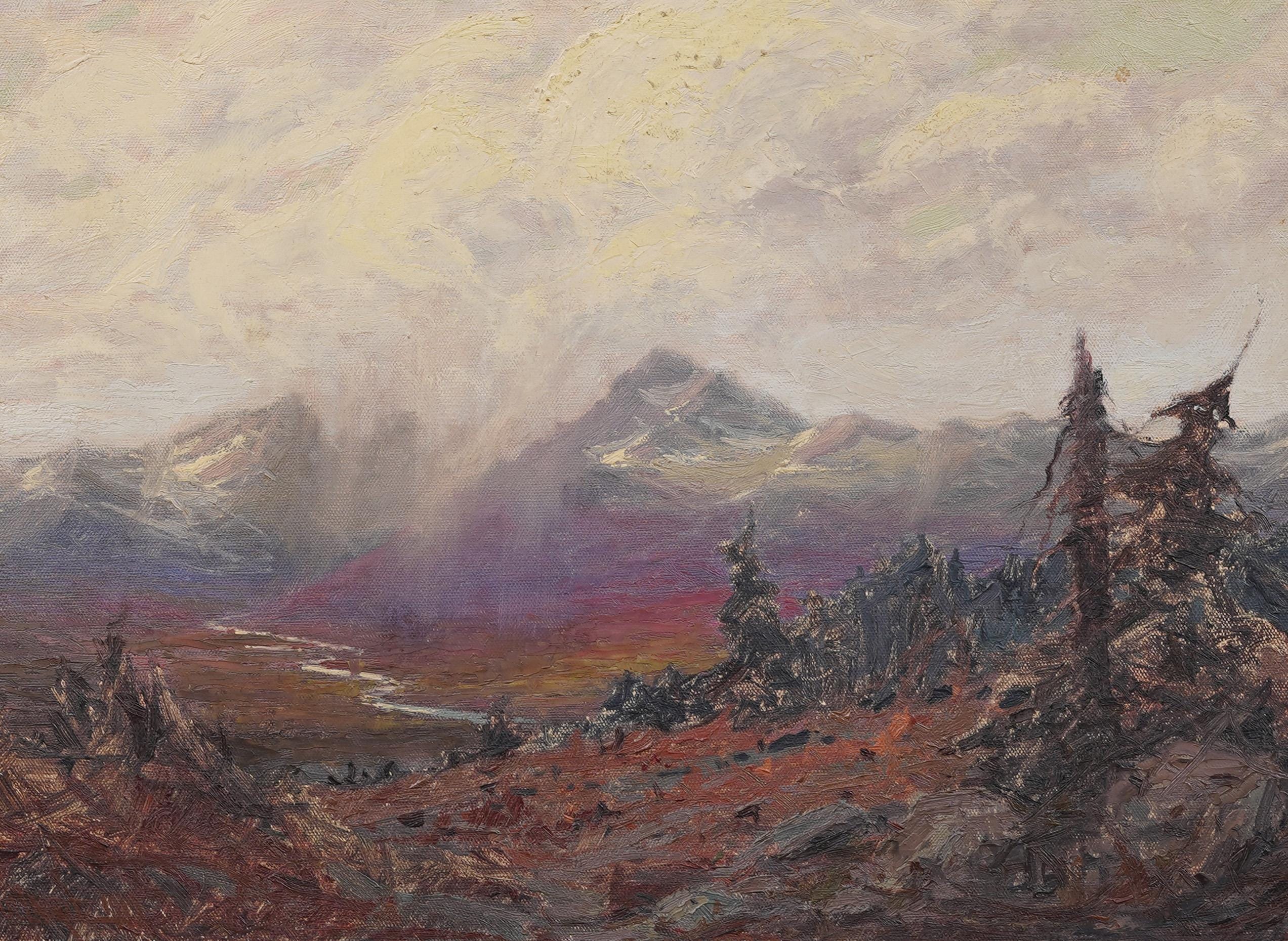
Painting by Paul Lauritz of Mt. Denali in Alaska, 1920
I’ve been thinking about obsessions lately, in the context of my work-in-progress. Zooming way out from the day-to-day drafting of the book as I approached the second draft allowed me better purchase to see my main character’s arc, and how it was or wasn’t coming through strongly enough. I need to make sure I’m always reminding the reader what’s driving her and why she makes the (sometimes inexplicable) decisions that she does.
One of the best (and slimmest) craft books I’ve read so far, Richard Hugo’s Triggering Towns, includes an essay for which the book is named that explores the idea of "triggering subjects” — that is, what are those narrative threads, or themes, we can’t help but be drawn to as writers. It’s natural in writing fiction that our characters become imbued with these obsessions, or, particularly for those of us writing historical fiction or nonfiction, we are lit up by the people we learn about who share those same triggering subjects as us, and that leads us to want to write about them.
“Our triggering subjects, like our words, come from obsessions we must submit to, whatever the social cost.” - Richard Hugo, “The Triggering Town”
I don’t think my protagonist Myrtle shares much in common with Marty Supreme or Marian Graves, except for this: her ambition and triggering subject may very well cost her too much, more than she could have imagined. And it’s up to me to make sure that’s a spectral presence starting from the very opening scenes of the book, becoming more and more corporeal the deeper in we go.
See more passages I saved from Triggering Towns and other craft books in my Quotation Compendium, a filterable database on Notion here.